
How Commercial Air Fresheners Work for Toronto Businesses
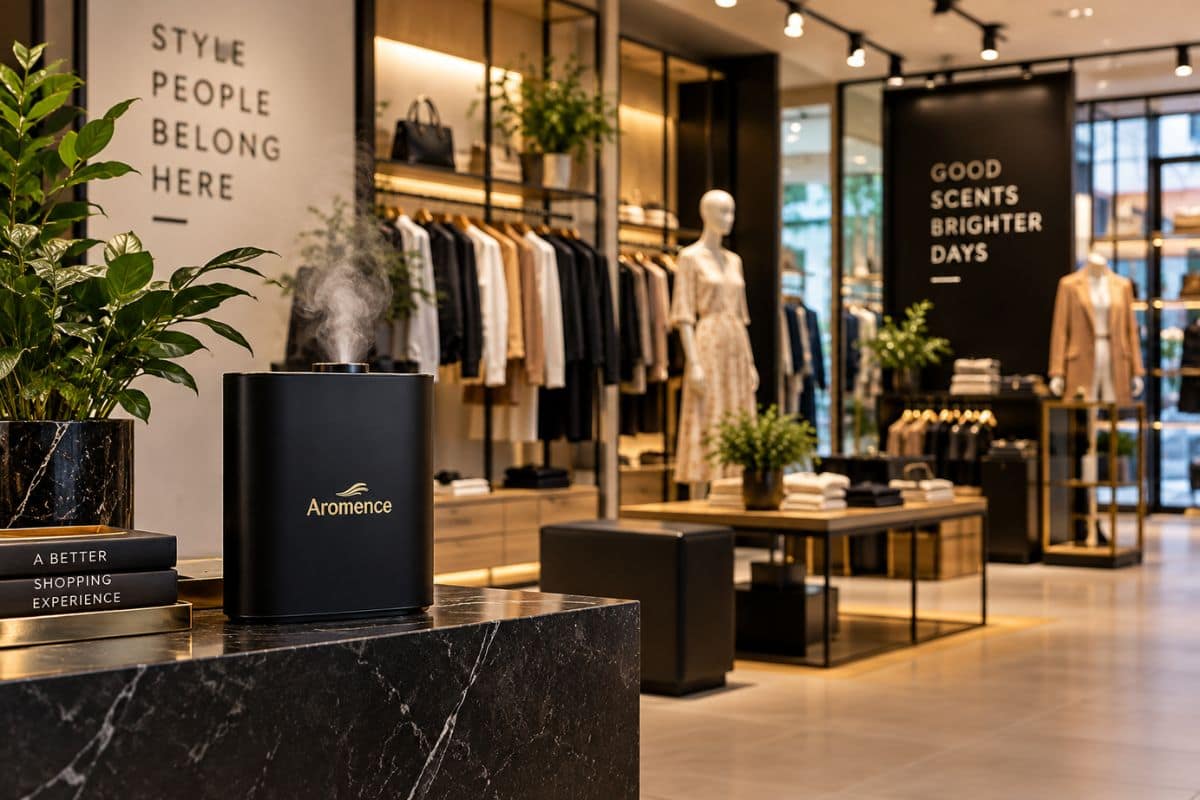
A customer walks into a clothes store, looks around and decides whether or not to stay. The lighting is suitable, background music is playing gently and the exhibits give a friendly appearance. The scent is another factor. The customer may not even notice it because it’s so subtle but it contributes to the entire ambiance.
That’s where commercial scent marketing for retail comes in. Instead of relying on the occasional air freshener, retailers can choose a fragrance that suits their brand and distribute it throughout their store in a controlled way.
Naturally, not every store should carry every fragrance. A busy furniture dealership in Mississauga has different needs than a high-end boutique in downtown Toronto. The products being sold, the size of the area and even the flow of air within the structure can all have an impact on the outcome.
This guide looks at what retail scenting involves, how to choose a suitable fragrance and what to consider before bringing it into your store.
Commercial scent marketing for retail is the planned use of fragrance to complement a store’s atmosphere and brand identity. It’s similar to picking music for a store. A fancy jewelry store and a sportswear store wouldn’t necessarily have the same playlist. The same thought should be given to fragrance.
A retailer might select a warmer scent for a home goods showroom or something new and subtle for a modern apparel store. The scent becomes one more detail that helps the space feel consistent.
Professional scenting equipment makes this easier to manage. Instead of spraying fragrance whenever someone remembers, a business can control how much is released, where it travels and when the system operates.
There’s nothing wrong with using an air freshener for an occasional odour problem. It simply isn’t designed to do the same job as a planned retail fragrance system.
Feature | Retail scent marketing | Regular air freshening |
Purpose | Complement the store’s atmosphere and brand | Add fragrance or mask odours |
Fragrance choice | Selected for the business and its space | Usually based on personal preference |
Coverage | Planned around the store layout | Often limited to a nearby area |
Intensity | Can be adjusted for consistent distribution | May vary between uses |
Scheduling | Can operate during business hours | Depends on the product |
The difference is consistency. If fragrance is going to become part of your store’s identity, it needs to feel familiar from one visit to the next.
It starts with a question that sounds simple but takes some thought: What should this store feel like? The answer helps guide everything that follows, from fragrance selection to diffuser placement.
Consider two stores selling similar clothing. One has bright lighting, colourful displays and upbeat music. The other uses muted colours, carefully spaced racks and a quieter atmosphere.
Even if their products overlap, the fragrance that suits each store may be quite different.
As for choosing a scent, retailers should consider their brand personality, the customers they serve and the way in which people use the space. And it’s worth considering the employees who will be smelling it for a lot longer than most shoppers.
A fragrance can smell wonderful from a sample bottle and feel completely different once it’s circulating through a store. That’s why testing matters.
Try a few options in the actual retail environment. Pay attention to how each one works alongside the products, interior materials and existing smells.
A cosmetics retailer, for example, needs to be particularly careful. An ambient fragrance shouldn’t interfere with customers testing perfume or scented skincare products.
Once you’ve settled on a scent, you need a way to distribute it. A small boutique may only need one commercial diffuser in the correct size. If your showroom is a large one you may need several units or a system tied into compatible HVAC equipment.
There isn’t a universal setup. Ceiling height, entrances, partitions and ventilation all affect how fragrance moves.
A store shouldn’t need to smell stronger at closing time simply because its diffuser has been running all day.
Professional systems allow retailers to adjust fragrance output and depending on the equipment, schedule operation around opening hours. The aim is to maintain a comfortable level throughout the day, rather than making the scent more noticeable with every passing hour.
Retailers put a lot of effort into making their stores look appealing. Scent gives them another way to manipulate the experience, as long as it’s not forced in with all the other things.
Think about a place you recognize as soon as you walk through the door. It might be the music, the lighting or the familiar arrangement of the space. Sometimes, it’s the smell.
A consistent fragrance can become one of the details customers associate with a particular store. It won’t replace good products or helpful staff but it can add to the experience people remember.
Branding doesn’t stop at the shopfront. A retailer’s identity comes through in its displays, packaging, service and interior design. Fragrance can sit alongside those elements.
For instance, a store with a minimalist design might opt for a subtle, simple scent. A home décor retailer with warm lighting and natural materials may want to go something softer and more woody.
The fragrance should make sense in that environment. Customers shouldn’t feel as though they’ve walked into a completely different business.
A fragrance doesn’t need to be strong to be effective. In fact, the best approach is often to keep it in the background. Customers should be able to browse, speak with staff and try products without feeling surrounded by perfume.
More important than intensity is comfort. If a smell bothers someone, then maybe the scent should be reviewed or less of it released.
Maintaining the same atmosphere across several stores isn’t always straightforward. A retailer might operate a small location in Toronto, a larger store in Vaughan and another branch in Mississauga. Their layouts may differ but customers should still recognize the brand.
Using a consistent fragrance profile can help connect those locations. The equipment and settings can then be adjusted to suit each space.
Stores change their displays throughout the year. Fragrance can change with them, although it doesn’t have to. A retailer may introduce a subtle seasonal variation during the holidays or choose a different profile for a special event.
The important thing is to avoid changing scents so frequently that the store loses its familiar atmosphere.
Fragrance works best when the fundamentals are already in place. A store with attractive displays, comfortable temperatures and attentive staff has a strong foundation. Scent can complement that experience.
It can’t make up for cluttered aisles, poor service or products that don’t meet customer expectations.
One of the biggest mistakes a retailer can make is to pick a scent simply because it’s a popular scent. Different stores have different products, customers and ambiance. What works perfectly in one space can be distracting in another.
A clothing boutique might explore fresh, floral or woody fragrances, depending on its brand. A contemporary fashion store may suit something crisp and light. A boutique with a more traditional aesthetic could prefer a warmer profile.
Fitting rooms need particular care. They’re enclosed spaces, and customers may spend several minutes inside them. Fragrance should remain subtle rather than becoming concentrated.
Beauty stores already contain plenty of scented products. Because customers are often testing perfumes, lotions or skincare items, adding a strong ambient fragrance can create an unnecessary distraction. For this reason, perfume counters may require little to no additional fragrance.

In luxury retail, small details often carry a lot of weight. The materials, lighting and display arrangement are usually chosen carefully. Fragrance should receive the same attention.
A subtle woody or floral scent might be appropriate but this should be a decision based on the character of the brand rather than a presumption that all luxury stores should smell the same.
Furniture showrooms are designed to help customers picture products in their own homes. Fragrance can complement that presentation, particularly in staged living rooms or bedroom displays.
Warm and fresh profiles are worth exploring, but a large showroom may need more than one fragrance zone to prevent uneven distribution.
Scenting a shopping centre is quite different from scenting an independent boutique. Several stores might also use shared corridors, entrances and ventilation systems. The smell from one store might reach the other store where it is unwanted.
Shared spaces call for careful planning, suitable equipment and conservative intensity settings.
Retail environment | Fragrance direction to explore | What to watch for |
Fashion boutique | Fresh, woody or floral | Brand fit and fitting-room comfort |
Beauty retailer | Light and understated | Interference with product testing |
Luxury boutique | Subtle woody or floral | Consistency with the interior |
Furniture showroom | Warm or fresh | Uneven coverage across displays |
Shopping centre | Light and broadly appealing | Shared spaces and neighbouring stores |
These are simply guidelines and there aren’t any hard-and-fast rules to follow. The best option for you is what works for your particular store.
Choosing the right fragrance is only half the job. The equipment distributing it determines how consistently the scent reaches different parts of the store. Professional retail scenting systems vary in capacity, installation requirements and available controls.

Cold-air diffusion is commonly used in commercial fragrance systems. The technology breaks the fragrance oil into fine particles that travel through the air around it without using heat.
Unlike occasional aerosol spraying, a properly configured diffusion system can provide controlled fragrance output over extended periods.
Standalone units can be practical for boutiques, smaller retail stores and individual showroom areas. They do not necessarily require integration with a building’s HVAC system, making them suitable for spaces where centralized installation is impractical.
However, equipment capacity should match the area being scented. A small diffuser placed in a large, open retail space may struggle to provide consistent coverage.
Larger stores may consider fragrance systems that connect to compatible HVAC equipment. These systems can use existing air distribution to help carry fragrance across designated areas.
They are not automatically suitable for every building. Ductwork, ventilation patterns, equipment compatibility and intended fragrance zones should be assessed before installation.
Depending on the equipment, commercial fragrance systems may include:
These features can help retailers maintain a consistent scent without requiring employees to manage the equipment throughout the day.
You don’t have to make it all at once. A more practical approach is to work through the store’s requirements before committing to a fragrance or system.
Start with the feeling you want customers to associate with your store. Warm and familiar? Fresh and contemporary? Quiet and refined?
Look at the experience you’re already creating through lighting, music, displays and service. The fragrance should belong in that same picture.
Walk through the store as a customer would. Notice the entrance, main shopping areas, checkout counter, fitting rooms and any spaces separated by walls or partitions.
Then consider airflow. Are doors opening frequently? Does the store have high ceilings? Are there areas where air barely circulates?
These details help determine where equipment should go and how much coverage is needed.
Select a few scents that fit the brand and test them in the space. Don’t smell a sample for a few seconds and make up your mind. Allow the scent to diffuse on a low level and see how it is over time.
Feedback from employees can be useful as they experience the smell through their workday.
The right system depends on the store, not simply the number of products on a supplier’s website. A small boutique may do well with a standalone diffuser. A large showroom with several distinct areas might need multiple units or a compatible centralized system.
Think about coverage, installation, controls and maintenance together.
It’s easier to increase fragrance intensity than to recover from making the store smell overpowering. Begin conservatively and make small adjustments.
Check enclosed spaces and areas close to the equipment. The scent may feel much stronger there than it does at the other end of the store.
Once the system is running, pay attention to how it performs. Does the fragrance feel consistent in the morning and afternoon? Is it stronger near the entrance? Do employees notice changes when the heating or cooling system is running?
A boutique in downtown Toronto and a large showroom in Mississauga might need different tweaks, even if they’re using the same fragrance.
The scenting system needs periodic review, not simply forgotten about after implementation.
Most scent marketing issues stem from a few common, avoidable mistakes.
The owner’s favourite scent may not suit the brand or the customers. Buy according to the store, its goods and the people shopping there.
A strong scent is tiring, especially in enclosed spaces. If shoppers comment on it, it’s too high. An effective store fragrance operates subtly in the background.
A diffuser in the wrong spot leaves one corner overwhelming and another nearly empty. Placement should follow how air actually moves through the store.
A boutique, a showroom and a shopping centre unit differ in size and airflow. What works in one won’t carry over automatically.
Refills, equipment checks and seasonal adjustments keep the scent the same. Leaving a diffuser empty defeats the entire purpose.
Remember that there are visitors and staff members who have sensitivity to fragrances. Moderate levels and an easy way to raise concerns go a long way.
The cost of professional retail scenting depends on the store and the type of system required. A small boutique with one fragrance zone will generally have different equipment needs from a multi-level showroom or shopping centre.
The main considerations include:
Aromence offers commercial fragrance solutions for businesses with different space requirements.
Plan | Starting monthly price |
Essential | $149 |
Professional | $249 |
Commercial | $449 |
These starting prices provide a general reference, but the appropriate plan depends on the actual retail environment. Businesses should consider the full requirements of their space rather than selecting equipment based on price alone.
For more information about available options, explore Aromence’s commercial scent marketing services
Retailers across Toronto and the GTA face practical challenges that can influence fragrance distribution. Seasonal temperature changes, different building layouts and varying customer traffic all affect how a scenting system performs.
Toronto’s winters and summers can create very different indoor conditions. Heating and cooling systems can alter patterns of air flow . Entrance doors may allow air from the outdoors to come in during the day.
A fragrance setting that works well during winter may need adjustment during warmer months. Retailers should review their systems periodically rather than assuming one configuration will work equally well all year.
A compact boutique in downtown Toronto may have limited floor space and a relatively simple layout. A shopping centre in Vaughan or Mississauga could involve shared ventilation, multiple entrances and larger common areas.
Retail stores in North York, Scarborough, Markham and Richmond Hill may have their own combinations of ceiling height, traffic and ventilation requirements. These differences matter when selecting equipment and planning fragrance distribution.
Fragrance should never come at the expense of comfort. Some employees and visitors may be sensitive to scented products, particularly in enclosed environments.
Retailers should keep intensity conservative, consider feedback and follow applicable building policies and product-use guidance. A comfortable shopping environment matters more than making every corner of a store smell strongly of fragrance.
A retail fragrance should seem like it belongs in the store. When the scent is right for the brand, the equipment fits the space and the intensity is comfortable, fragrance can be a thoughtful part of the shopping experience.
For businesses exploring commercial scent marketing for retail, Aromence offers fragrance solutions for different store sizes and layouts across Toronto and the GTA.
Whether you’re planning fragrance for a small boutique, a busy showroom or several retail locations, Aromence can help you explore options suited to your business.
Contact Aromence to discuss your retail space and find a fragrance approach that feels right for your brand.
Yes. Smaller boutiques and independent retailers can use appropriately sized fragrance systems. The key is to match the equipment and intensity to the layout of the store, rather than choosing a diffuser that is unnecessarily powerful.
Start with your brand identity, products and intended atmosphere. Test a few fragrance profiles in the actual store and gather employee feedback before deciding which one feels most appropriate.
Yes, but larger properties may require multiple fragrance zones or compatible centralized equipment. Airflow, shared spaces and neighbouring retailers should all be considered when planning fragrance distribution.
Placement depends on the store's layout, airflow and intended coverage. Avoid positioning equipment where fragrance becomes concentrated around customers or employees. A professional assessment can help identify suitable locations.
Refill frequency depends on equipment capacity, fragrance intensity and daily operating hours. A store running its system for extended periods may need more frequent refills than one operating shorter hours.
Create unforgettable atmospheres. Elevate every moment with the power of scent. Let’s bring your space to life.


